Thursday, September 9, 2010

King Lear is Very Old, Not Very Wise

Some people say that they have no regrets. That if they could go back they would do it all the same. Live the same life over again, make the same decisions, see the same sights and love the same people.

You have to be the smuggest, most self-deluding jackass in the universe if you think that your life is so amazing that it couldn’t be improved upon.


Take the movie Groundhog Day. Only after repeating that single day over and over for about ten years does Bill Murray achieve a level of fulfillment and satisfaction that makes him truly happy… And that’s just to perfect a single DAY!


All I know is that when I get to my deathbed, if someone is stupid enough to ask me: “Any regrets?” I’m going to say: “Hell yeah, I’ve got regrets. I’ve got boatloads of 'em. Regrets of Titanic proportions, things I should have said, people I should have fought for and years when I should have worked harder. And I’ve got minuscule raindrop regrets, days I should have turned left instead of right, nights I should have gone out, mornings I should have slept in, restaurants at which I never should have eaten. If I could do it all over again... I'd do it differently.”


But for all the things I regret, mine is a raindrop life, and my mistakes don’t nearly approach the scale and horror of King Lear’s disastrous regret.


I think we all know the story of Lear, he was ready to divide his kingdom between his three daughters as long as they satisfied him by professing their love for him. Goneril and Regan, the wicked older sisters, spew a bunch of bombast at him about the totality of their love, and Cordelia, the youngest sister can only be sincere and says she loves her father no more or no less than a daughter should love her father. Lear disinherits her and she marries the King of France. Lear’s wicked daughters kick him out in a storm, and Cordelia comes to find Lear when he’s broken and sad. Then they all die.


There is also the amazing subplot in the play about the Earl of Gloucester, whose bastard son, Edmund, conspires against his brother Edgar to take all the lands and title from their father. Edmund is a villain of Iago-like cunning, with a twinge more humanity than Iago because he desired pieces of a noble life: property, respect and possibly even love. Not to mention that before dying he attempted to stop his last act of villainy, which was to have Cordelia murdered.


Edmund forges a letter from his brother, Edgar, inviting him to conspire to murder their father and share in the inheritance:


“This policy and reverence of age

makes the world bitter to the best of our times; keeps

our fortunes from us till our oldness cannot relish them. (1:2)


The letter claims that Edgar doesn’t want to wait for his father, Gloucester to die before getting his inheritance, because you need to be young to enjoy it. This is an echo of the Duke’s speech in Measure For Measure, and clearly must have been a thought on Shakespeare’s mind. He came into money and prominence late in his life, when he was probably suffering from an STD and -- as he feared -- he did not live to enjoy a long retirement.


Gloucester’s reaction is to blame the stars for the treachery he perceives, both here and in Lear’s actions:


These late eclipses in the sun and moon

Portend no good to us. (1:2)


And after he exits, Edmund reflects on the foolishness of this subscription to prescribed destiny:


This is the excellent foppery of the world,

That when we are sick in fortune—often the surfeits of

Our own behavior—we make guilty of our disasters

The sun, the moon, and stars, as if we were

Villains on necessity, fools by heavenly compulsion,

knaves, thieves, and treachers by spherical predominance;

drunkards, liars, and adulterers by an enforc’d

obedience of planetary influence; and that we

are evil in, by a divine thrusting on. (1:2)


Lear partakes of this submission to the natural elements when he is out in the storm with his fool:


Rumble thy bellyful! Spit, fire! Spout, rain!

Nor rain, wind, thunder, fire are my daughters.

I tax not you, you elements, with unkindness;

I never gave you kingdom, call’d you children;

You owe me no subscription. Then let fall

Your horrible pleasure. Here I stand, your slave. (3:2)


Lear created this storm for himself. His foolish stepping-down and division of his kingdom cause all of the turmoil. He has the power to come in from the storm, but he does not.


Lear and Gloucester represent an old and foolish way of thinking that certain things are meant to be. Whereas the younger characters in the play are willing to own their free will and go after the things they want. Cordelia’s unwillingness to play her father’s game in the first scene is a perfect example of youthful defiance of the laws of nature and the rule of the old. Whippersnappers.


I may have quoted the following quote before. It’s been important in my life, and I find it appropriate to bring up again here:


Practically, the old have no very important advice to give the young, their own experience has been so partial, and their lives have been such miserable failures, for private reasons, as they must believe; and it may be that they have some faith left which belies that experience, and they are only less young than they were. (Walden, Henry David Thoreau, p. 9)


It was on a walk along the Mississippi River with the first girl I fell in love with that she referred to this line, and I recognized it and completed it. It's no coincidence that the two of us had read Walden. Millions of people have read it, and we were nerds. It's maybe not that incredible that we both remembered the quote. It has some notoriety. But in the moment, it seemed like perfectly accomplished destiny.


What's amazing is that I think back on this walk and this particular love. And even though I feel so strongly that I would do things differently in my life if I could. It's possible that this culmination of youth and literacy would not be recreated nor have an equivalent in other, imaginary iterations of my life.


Would it be worth giving up a few minutes of near perfection to take that chance?

Or is reconciliation the preferable medicine for our regrets?


Lear: ... If you have poison for me, I will drink it.

I know you do not love me; for your sisters

Have, as I do remember, done me wrong.

You have some cause, they have not.

Cordelia: No cause, no cause.

...

Lear: You must bear with me. Pray you now, forget

and forgive. I am old and foolish. (4:7)


Lear screws up and is forgiven before the whole thing falls apart forever. It could be that admitting he was wrong -- the beauty of mercy from the most important person in his life -- could so eclipse his errors that this became the perfect moment of his life.


In Breaking Bad last season, in the episode called "The Fly," Walt laments that he lived past the perfect moment. The moment when his criminal endeavors could have provided for his family enough and the positive perception the people he cared about had of him was still intact. Lear, like Walt, lives too long. Maybe by moments, maybe living past his first line of dialogue was too long. The problem is that if you don't live long enough to screw up, you don't live long enough to enjoy forgiveness. Reconciliation. The mercy of others who have seen our flaws and still find us worthy of affection.


I am 32. I talk about regrets as if those I now possess will be insurmountable in the decades of life that remain. I am young yet, and foolish. I will only grow less young than I am. Hopefully I will grow less foolish too, but I'm not banking on it. It's okay to lament past choices, but the key to mastering regret lies not in time travel and not in parallel universes, but in future action.

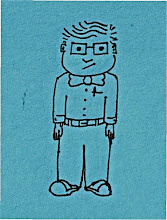
Tuesday, August 31, 2010

10th Grade Gabe Goes All Intertextual on Measure For Measure

Gabriel Llanas

English 10

Mr. Elieff

April 22, 1994


Measure For Measure Intertextual Essay


            In order to demonstrate the wisdom of Shakespeare in his play Measure For Measure I will break off a piece of intertextual analysis up in this mug as we were asked to do for this assignment.

            The Duke in this play is a meddler who is too chicken to enforce his own laws in Vienna and leaves the responsibility to Angelo and Escalus. But then he comes back disguised as a friar and messes with everybody. He shows that Angelo is a hypocrite for being lustful even though he tried to execute Lucio for that same crime. And then the Duke himself tries to marry the most virtuous nun-in-training Isabella.

            Guys like the Duke think they know it all and can push everyone around and then act like they’re so smart and heroic. The Duke (disguised as a friar) gives some terrible advice to Lucio while he is sitting on death row for having sex with his fiancĂ© out of wedlock and getting her pregnant. Lucio is waiting to hear how is sister did when she went to beg for his life from Angelo and the Duke tells him:


Be absolute for death: either death or life

Shall thereby be the sweeter. (3:1)


            The Duke basically goes on to say that Claudio should want to die because life sucks so much. Then at the end, he says this interesting thing:


Thou hast nor youth nor age,

But as it were an after-dinner’s sleep

Dreaming on both, for all thy blessed youth

Becomes as aged, and doth beg the alms

Of palsied eld; and when thou art old and rich,

Thou hast neither heat, affection, limb, nor beauty,

To make thy riches pleasant. What’s yet in this

That bears the name of life? (3:1)


            The Duke is saying that when you’re young you want the riches of old age, and when you’re old, the riches are no good because you don’t have your youth. Life is pointless because you can never have everything that you want. Or as Sebastian the Crab would say: “The seaweed is always greener, in somebody else’s lake.”

            Debbie Downer in the house.

            Now check this, E-Dog. When I was in 5th grade I read the Chronicles of Narnia, and in the last book they talk about Queen Susan, who wasn’t invited to live in Aslan’s land at the end of Narnia, because she was no longer a friend of Narnia. She could not remember it. When the others would talk about it she would say, "What wonderful memories you have! Fancy your still thinking about all those funny games we used to play when we were children.” (Lewis, The Last Battle, p. 154)

Then Polly observes:


"She wasted all her school time wanting to be the age she is now, and she'll waste all the rest of her life trying to stay that age. Her whole idea is to race on to the silliest time of one's life as quick as she can and then stop there as long as she can." (Lewis, p. 154)


            Susan lives in the small overlapping time in life when your youth is at its apex and you have all the trappings you need to be happy. The Duke thinks there is no overlap, and that you are always wanting one or the other. The outlooks are nearly similar, but if the Duke really believes there is no overlap then he is doomed to melancholy.

I just got my braces off, I possess a headful of mad-wavy hair that the young ladies can’t get enough of, I may have acne and no car or driver’s license, but I don’t give a care. It’s like Bill and Ted say: “The best place to be is here, and the best time to be is now.”

            Or even better look at what Oscar Wilde wrote in The Picture of Dorian Gray:


“You have the most marvelous youth, and youth is the one thing worth having… Someday when you are old and wrinkled and ugly, when thought has seared your forehead with its lines, and passion branded your lips with its hideous fires, you will feel it, you will feel it terribly. Now, wherever you go you charm the world. Will it always be so?... Youth! Youth! There is absolutely nothing in the world but youth!” (Wilde, The Complete Works of Oscar Wilde, p.186-187)


            This speech leads to Dorian Gray living a life of lechery and sinful abandon that gets reflected on his magical painting while his youth is preserved on his face. Susan is kept out of what is essentially heaven in the chronicles of Narnia and Lucio who actually did break the law is saved from punishment by the Duke, who seems to have orchestrated this whole thing just so that he could appear benevolent and hook up with the virginal Isabella.

            As you may be aware I sit on Judiciary Board, and when Sasha and her roommate Karin came before the J-Board for disciplinary action, I was all up in that case. Sasha – as you know – is a grade-A hottie. The two of them had snuck off campus one weekend and gotten busted. They got off pretty easy with a dormed weekend when they could have gotten suspended, but I made a point of being the strongest advocate for fully pardoning their trespasses. So when it came time for their dormed weekend guess who was playing truth or dare up in their dorm room until lights out?

            Somewhere there’s a painting of me dissolving into monstrosity.

            I guess I don’t blame the Duke for playing everyone like he did. I mean, he’s probably just a sucker with low self-esteem who needs to flex the few muscles he has every once in a while in order to impress the ladies. So what if he’s not going to get invited to Aslan’s land. Between you and me, Mr. E, I’d rather kick it on planet Earth with the Susans and Sashas and milk these silly days for all the sweet young nectar they’re worth. Peace.

Monday, August 23, 2010

The End of Magic

All’s Well that Ends Well lives between an era of fairy tales and the age of science and rationality. Within the play there is a mystical power in virginity, and love that conquers riddles and performs feats believed impossible.

Helena is in love with Bertram. The problem is that he is a nobleman and she is a lowly physician’s daughter. Bertram goes to attend the king of France at court. The king is deathly ill. Helena devises a cure from medicines that her father instructed her to use and goes to the court to cure the king, her reward is that she can choose any husband for herself and the king will force him to marry her. She chooses Bertram, who resists, but marries her and promptly runs away with the intention of never consummating the marriage. He later challenges her to two tasks saying he won’t call her wife until she can get his precious family ring off his finger and get pregnant with his child. Helena is smart and tricks him into giving the ring to a hot girl named Diana, and then sleeps with him when he thinks he's sleeping with Diana. In a fairy tale ending, Bertram swears he will love her and we are maybe expected to believe that they are going to live happily ever after.

Early in the play, Helena has an argument with Parolles about virginity. She begins:

Man is enemy to virginity; how may we barricado it against him? (1:1)

Parolles responds in tirade that she is being foolish:

Loss of virginity is rational increase, and there was never virgin got till virginity was first lost. (1:1)

There is no defense for it, man is its enemy and it is natural that he will conquer virginity so that the world will be peopled with further virgins. The circle of virginity. But nearing the conclusion of their argument, we have a mysterious incomplete line. Helena says:

Not my virginity yet: [….] (1:1)

There is debate about how much of the text is lost here, because the proceeding line picks up an entirely new thought. All that is known is that something is missing, and we have no idea what it is.

So what should we make of this missing line? I'm going to jump to a conclusion that serves my present purposes and could be completely wrong. Helena is resolving not to lose her virginity yet. I would think that the missing lines unfold the plan that yet requires her virginity. Namely, she must cure the king of his ailment and marry Bertram. These are monumental tasks, and she needs virgin magic to achieve them.

After Helena cures the king, Lafew observes:


They say miracles are past, and we have our philosophical persons, to make modern and familiar, things supernatural and causeless. Hence is it that we make trifles of terrors, ensconcing ourselves into seeming knowledge, when we should submit ourselves to an unknown fear. (2:3)


Helena’s virginity brought about the miracle to which Lafew refers. The idea of virginal power persists in this play at the end when the virgin girl Diana goes before the king to argue in Helena’s stead. She is the one who corners Bertram and sets up Helena's arrival as the mastermind behind this plot to win Bertram's love. Why doesn't Helena administer these arguments in disguise the way that Portia wins freedom for Antonio at the end of The Merchant of Venice? I shall tell you. It's because Helena loses her virginity to her husband in the middle of Act 4. With her virginity go her magical powers. The brilliant miracle-worker utters a mere 13 lines in her husband's presence in the lackluster final scene of the play.

Loss of virginity is the loss of magic. I remember this from something else I read.

In the last book of The Prydain Chronicles, The High King by Lloyd Alexander, Taran, Assistant Keeper of the Oracular pig HenWen, defeats the forces of Arawn, Lord of Death, and in a somber twist, the magic that had ruled their age dies out and has to go away (much like the way the elves go to the Grey Havens at the end of The Lord of the Rings).

Unfortunately for Taran, he is in love with the enchantress Princess Eilonwy who must also go away since she has magical powers. Happily it is revealed that she can wish away her magical powers by using a ring she was given in one of the earlier books. Without her magical powers she’ll be able to stay and marry Taran. Throughout the series, Eilonwy also carried around a magical golden bauble that was in part the source of her powers, much like a wand.

Here is the passage where she loses her magic:


Wondering and almost fearful, Eilonwy closed her eyes and did the enchanter’s bidding. The ring flared suddenly, but only for a moment. The girl gave a sharp cry of pain. And in Taran’s hand the light of the golden bauble winked out.

Eilonwy blinked and looked around her. “I don’t feel a bit different,” she remarked. “Are my enchantments truly gone?” (Alexander, The High King, p. 246)


I once dated a girl who, like me, had waited for a long time before having sex. She said she didn’t know why she waited so long and that one day she just looked around and was like what am I holding onto this V-card for?

I was a virgin for a long time, first because I was waiting to be in a relationship with someone I loved, then because I was too hapless and self-conscious to know how to coax someone into physical intimacy. And then I went back to my old fallback of waiting to be in love. The whole virginity-losing process could have been helped along so well if I would have just started drinking beer at an early age like a normal American.

As it happens, it all worked out and I was in love when I first had sex. The girl had warned me that sex is a strange beast. I was a bit brash, and too excited to get on with it at that point to pay her warning much heed. I loved her, I was more than ready, and I downplayed any possible fallout.


Hence is it that we make trifles of terrors, ensconcing ourselves into seeming knowledge, when we should submit ourselves to an unknown fear. (2:3)


In the way that Eilonwy’s bauble blinks out and she doesn’t notice her enchantments are gone, sex doesn’t change you in the instant. Gradually, it unlocks so much that didn’t exist before. It shined a light on the empty spaces of my life and filled them with hope and opportunity. It was great. Until my heart got broken and it all fell apart.

You go to a very dark place when you grow close to someone, imagining a parallel future on and on to golden horizons. And then she diverges. Leaves you. You feel foolish for not having anticipated her needs. You feel like a moron for wanting her when she doesn’t want you. You feel weak when you realize how reliant your happiness was upon her presence.

Helena's heart breaks before she even attains love. But she fights back. Tricking her husband into sleeping with her, and then appears in the end trusting that he'll honor this loose promise:


I’ll love her dearly, ever, ever dearly. (5:3)


Almost with a vengeance does she win his husbandship, which may turn out to be a bitter one.

Maybe her scarce stage-time at the end of the play is intentional. As one of his last (possibly last) comedy, All’s Well That Ends Well isn’t bright. It’s littered with the difficulties of maturation, and it comes as Shakespeare’s mind was leaning into the great tragedies, Othello among them.

Othello tiptoes so close to being a romantic comedy, Iago’s plot of convincing Othello of Desdemona’s infidelity is nearly the same as Don John’s plot to convince Claudio of Hero’s infidelity in Much Ado About Nothing. But in Iago’s universe there was no wit as fierce as his to undo his mischief. Otherwise that play might have ended well for the Moor. What subtle turns kept All's Well That Ends Well from ending in a manner most heinous?

The period is placed firmly on this comic chapter of Shakespeare’s writing with the King’s epilogue. Which makes it plain that this play, where the low class women were able to rise in ranks and in fairy tale fashion conquer men of nobility, is nothing more than a great fantasy. The actor who plays the King removes his crown and says:


The king’s a beggar, now the play is done;

All is well ended, if this suit be won,

That you express content; which we will pay,

With strife to please you, day exceeding day.

Ours be your patience then, and yours our parts;

Your gentle hands lend us, and take our hearts. (epilogue)


A play is similar to a seduction. Disbelief momentarily suspended, at the end, the crown of the seducer is removed revealing a person with flaws alike your own. They lend you their gentleness, in hands and in speech, and then take your heart. Or at least a small piece.

Tuesday, August 17, 2010

Got Out of My Dreams, Got into My Car

            When I was in college I was an idiot with almost no understanding of relationships or how to interact with the opposite sex. And I thought I was in love with a girl I knew from high school. For four years I shot myself in the foot every time a quirky, cute and wonderful person expressed interest in me (they found my childishness endearing when in fact it was stupidity). I was rude or awkward, curt and ridiculous. Ah, the good old days.

            Then one night I had a dream about the girl I thought I was in love with. A glorious dream filled with golden light. The kind you wake up from feeling invigorated, confident and reckless. I got into my car and drove 1200 miles to New Orleans. To a southern university where the testosterone flowed like water. I saw her across a field littered with plastic cups and other dander shed the night before when there had been a G-Love and the Special Sauce concert held there. I ran to her, and she threw her bony arms around me. My God she had a smile that could start a car.

            She was happy to see me because we had been friends, but I had no skills. And abandoning shyness for boldness made me feel like a stalker. My impromptu road trip must have appeared calculated. She had a "guy she was into" at the time. He seemed like a douche. I spent most of my time there reading Alex Garland's novel The Beach, and feeling like a tool.

            That was the last time I acted on something I learned from a dream. If I would have read sonnet 61, I would have known that all that sunshine and gold I dreamed of was the result of my unfounded adoration and had nothing to do with a psychic reciprocation of affection. 


61

Is it thy will thy image should keep open

My heavy eyelids to the weary night?

Dost thou desire my slumbers should be broken

While shadows like to thee do mock my sight?

Is it thy spirit that thou send’st from thee

So far from home into my deeds to pry,

To find out shames and idle hours in me,

The scope and tenor of thy jealousy?

O no, thy love, though much, is not so great;

It is my love that keeps mine eye awake,

Mine own true love that doth my rest defeat,

To play the watchman ever for thy sake.

     For thee watch I, whilst thou dost wake elsewhere,

    From me far off, with others all too near.


            There is much speculation and debate about who the fair young man was to whom Shakespeare addressed his sonnets. One popular theory is that it was Henry Wriothesley, The Earl of Southhampton. Henry’s relatives wanted to pressure him into getting married to a specific young woman, and they may have commissioned Shakespeare to write these sonnets to him specifically because he was already a fan of Shakespeare’s poetry. Venus and Adonis and The Rape of Lucrece were both dedicated to Southhampton. This is why the first series of 17 sonnets (and several others throughout) recommend that the young man ensure that his beauty persist in the world by having a child.

            In this era it was expected that men would be sexually attracted to young men, and expressing that attraction was no more taboo than expressing a sexual attraction to a woman. Sodomy was certainly viewed as a sin, but so was adultery. It can probably be assumed that both were popular pastimes of Shakespeare's contemporaries.

            The sonnets are fascinating as an autobiographical puzzle. One outstanding characteristic of the sonnet was that it was meant to be vague, so that it would not stand as evidence of adultery or impropriety in an era when such trespasses could be prosecuted criminally. This leaves us with a maze of metaphors and loose allusions to navigate. Could Shakespeare have been in love with this effeminate young man who was reluctant to get married? Yes. It’s also possible he concocted this poetry out of his imagination in the interest of supporting himself and his estranged wife and children during the time when the playhouses were closed due to the outbreak of the plague.

            Before I left New Orleans and that girl I thought I was in love with, I gave her a copy of the 30-page short story I’d written for her. It was about a quixotic high school kid in a cape named Tobin Grasshopper and his friend Gordon Godoy who are both in love with a girl named Neriya. They decide to start writing her love poems and leaving them in her locker. She's weirded out and it gets messy when Tobin goes crazy and shoots Gordon in the middle of the school.

Please take a moment to roll your eyes.

Part Cyrano, part Wes Anderson, part utter piece of crap. It was one of the best things I’d written up to that point in my life. Not for any of the actions or pacing or plotting. Not for the characters, but for the few small lyrical snippets I’d come up with to describe the character of Neriya. That was the one emotion I really understood while I was typing away in the computer lab in the basement of the Dewitt-Wallace Library at Macalester: the admiration of beauty.

I would quote something of the story here, but the floppy disk it was recorded on has long since found its way to the bottom of a benevolent trash bin.

My point was that genuine emotions are necessary to create poetry, but they do not have to be specific to the present details. Even a crappy story I wrote at the lovelorn age of 21 demonstrates that real emotions can be applied to fiction. Surely Shakespeare, the greatest writer of all time, was capable of deceiving a young patron of the arts in order to support himself for a quick minute when the going got tough.

            But I don’t think this was the case. I think Shakespeare really was in love with the young man. I think William was gay. He clearly didn’t mind living away from his wife for most of his adult life. On the other hand he also had plenty of sex with prostitutes, so feel free to disagree.

            There’s no way for us to ever discover the truth until we develop safe time-traveling technology. But I’d rather think he was gay and was writing some of this amazing poetry from a place of actual passion and desire so that I wouldn’t feel like such an ineffectual hack when I write love letters that should be honest and beautiful, but mostly suck balls.

            Also, I know people have heterosexualized his poetry over the years by changing pronouns, and those people should be maligned for their homophobia. Unfortunately, I think I just lumped myself into this category since I totally took his poem and applied it to the affections I had for a member of the opposite sex. 

Sorry, William... unless of course you weren't gay at all. Then shame on you, you big faker. 


Friday, August 6, 2010

The Dishonest Poet: Sonnets 1-17

            I had planned on being a teacher since I was a junior in high school and I determined that it was impractical for me to become a spy. This realization is its own chapter in my life that culminated with the worst planned prank in the history of prep school malfeasance, a stolen VHS copy of Forrest Gump, and the loss of virginity (not mine) in the back of a station wagon. But in December 1999, standing in the Registrar’s office at Macalester College, about to sign up for my last semester, I realized I didn’t want to teach. I wanted to write.

My parents’ recent divorce had filled me with clichĂ©d angst and a conventional disregard for convention. There was something domestic and permanent about becoming a teacher in the Midwest. I felt like I was marrying someone while already planning the divorce.

The problem was that during the fall semester I wrote three pretty good short stories. One about some kids who fill their house up with water, another about two old friends who try to rob a 24-hour donut shop in LaCrosse, WI, and the last was about what would happen if they changed the formula for water.

No one warned me that an English minor is the most useless thing you can get out of your college education, so I erased all the education classes from my registration and quixotically signed up for: Advanced Fiction Writing and Writing the Autobiography and Personal Essay. That spring I wrote over 200 pages of original material. All of which sucked balls.

But I loved writing fiction. Even in the autobiography class I wrote all about my evil twin brother Dante, confessing all the most embarrassing chapters of my life on his timidity and naĂŻve mischievousness.

My favorite moment of that spring semester was the day when they brought some mildly successful poet to talk to all of our classes, she was getting recognition at a literary event that evening at the school and she talked about writing poetry and we read some of her poetry and it was all terrible (except for one or two of the poems we read that she had collaborated with her 7-year-old son to write – I’m not kidding). But I was not overly hubristic, and was perfectly willing to accept that I might have absolutely no barometer for judging poetry.

She came to our advanced fiction class and she started talking about how she could never write fiction because she could never be dishonest with her writing. And I snapped. She had just called fiction writers liars. She just called me a liar. And if there is one thing I am not (was not) it is a liar.

“I think poetry is honest, and I don’t think I could ever write anything that was made up.”

“Writing fiction isn’t just making things up,” I said. “It’s finding truth in fictional events.”

“But the events are fictional and there’s something dishonest about that.”

            “So, everything you’ve ever written is true and we’re all liars?”

Diane Glancy, our professor, stepped in before I could inform her that her 7-year-old son was a way better poet than her. But the damage was done. From that moment on I would hate poetry with all of my heart.

This has made the reading of Shakespeare’s Sonnets the least-anticipated undertaking of my Year of Reading Shakespeare.


17


Who will believe my verse in time to come,

If it were filled with your most high deserts?

Though yet, heaven knows, it is but as a tomb,

Which hides your life, and shows not half your parts:

If I could write the beauty of your eyes,

And in fresh numbers number all your graces,

The age to come would say, “This poet lies;

Such heavenly touches ne’er touched earthly faces.”

So should my papers (yellowed with their age)

Be scorned, like old men of less truth than tongue,

And your true rights be termed a poet’s rage,

And stretched metre of an antique song;

    But were some child of yours alive that time,

   You should live twice: in it, and in my rhyme.


            The first 17 poems are all weird. They’re about trying to convince some young man to procreate. I mean look at this one. It’s great at first. Shakespeare says if he could capture the young man’s physical beauty in words then everyone would call him a liar in the future. But if the young man had a child, then there would be genetic proof that his words were honest.

            Weird.

            For one thing, Shakes, kids don’t always look like their parents, sometimes they look way different and goofy. But my favorite part here is the fear he has that in the future someone will say: “This poet lies.”

            William Shakespeare’s words are so exaggerative and complimentary, they are so evocative and opulent that no one human could ever achieve the prettiness they describe.

            So yes, William, I say this poet lies. This poet embellishes and prettifies and intentionally misleads. And it’s all good. Honesty ain’t all it’s cracked up to be.

            It behooves the written word to write the world better than it is. How else is it supposed to compete with television?

Monday, August 2, 2010

Troilus and Cressida and Nintendo

There was an old Nintendo video game called Trojan. I borrowed it from my friend Rocky, we probably traded for Contra or Metroid, which were the two best games in my collection for a long time. The final boss in Trojan was Achilles. As I was fighting him, I couldn't help but think how stupid it was that you didn't have to stab him in the heel to kill him. Even then I was a stickler for mythological accuracy.

There was also a video game called Kid Icarus, about a boy with wings, more like cupid than like Daedelus’s son. I never even played that one.

I’ve always been pretty good at video games. There was a Saturday once when I was a kid when I rode my bike to the Power House, which was the first place in Kenosha you could rent video games, I rented Ninja Gaiden 3: The Ancient Ship of Doom, took it home and cleared it in a single sitting. I rode back an hour or two later and they let me trade it for something else (Solomon’s Key maybe?). To this day I’d be willing to challenge anyone to a playoff of Bionic Commando, which I can clear in just over 30 minutes.

My whole life I’ve wanted my video game prowess to take me somewhere. The way Alex Rogan gets called up to space to defend the frontier against the Kodan Armada in The Last Starfighter. If only our virtual glory could translate to tangible glory that would endure for generations.

The Trojan War and its glories survive today in epic poems, video games, books of mythology and Brad Pitt movies, but I swear to God, until the moment when I cracked open my Riverside Shakespeare and started reading the introduction, I had no idea that Troilus and Cressida was a story of the Trojan War.

It is aptly labeled one of Shakespeare’s problem plays. There is no record of it ever having been performed at the Globe, It may have only been performed twice in Shakespeare's lifetime. It has been classified by different people as a history, a comedy, a satire, and a romance. It’s a sad, cynical, lyrical and incomplete account of the Trojan War that shifts focus from the story of the sundered lovers Troilus and Cressida to musings on the pointlessness of war, the inconstancy of fame and concludes with the inglorious murder of an unarmed Hector by a wrathful Achilles and his gang.

Troilus and Cressida were the clichĂ©d tragic lovers of Shakespeare’s time (the way Romeo and Juliet are now). They fall in love, make all sorts of vows, but then Cressida’s father defects to the Greek camp and he makes them trade a Trojan prisoner for Cressida. She is sent to the Greeks, and promptly falls in love with one of them, betraying Troilus.

At the end of their story Troilus has his brains battered out during some battle, but this play ends before that even happens. I learned about it from As You Like It when Rosalind delivers her speech about how no one ever died for love (see my previous blogpost).

The message of the play seems to be that the Trojan War felt as futile to the soldiers fighting it as Vietnam. In fact, the Trojan War might be more retarded than all of America’s wars put together. As Thersites says:


All the argument is a whore and a cuckold, a good quarrel to draw emulous factions and bleed to death upon. (2:3)


In Shakespeare's time Helen of Troy had been overly romanticized by Christopher Marlowe in Dr. Faustus, as you'll remember from Shakspeare in Love:


Was this the face that launched a thousand ships and burnt the topless towers of Ilium?


But Shakespeare’s discussion of her kidnapping here is a philosophical debate about when enough blood has been shed that it becomes ridiculous, unnecessary and perilous to continue fighting. If a kidnapped queen isn’t worth fighting for, is anything?

What I see here for the first time is Shakespeare’s inability to romanticize something for the stage. If you'll allow me to completely imagine the circumstances surrounding the writing of this play, I would hypothesize that he felt commercial pressure to write another tragic love story and delved into the familiar topic of the Trojan War only to find it was far too distasteful to romanticize.

He was perfectly capable of penning works of nationalism and propaganda like Henry V, to laud the glory of English military prowess, but he found the prospect of glorifying the unnecessary warmongering of 7 years stalemate over a kidnapping to be entirely distasteful.

In the play Six Degrees of Separation there's an awesome speech about painters losing their work:


"I thought, dreamt, remembered how easy it is for a painter to lose a painting. He paints and paints, works on a canvas for months, and then one day he loses it - loses the structure, loses the sense of it. You lose the painting."


The same goes for writers and the ease by which they can lose a script or a story. Sometimes you get lost in a topic. Sometimes the world you’re entering is too messy for wise fiction and in order to tell the story in an interesting way, you need to simplify it so much that the complexity the subject demands is impossible to achieve. Shakespeare's theater was called The Globe, but it was merely a stage, and not all things in life can be effectively addressed in microcosm.

Imagine if you saw Romeo and Juliet today, and if the play was riddled with labored discussions of the futility of the feud. If Tybalt was a whiner, too proud to act, and the play ended with the death of Mercutio. That’s about the level of closure we get with Troilus and Cressida.

Ulysses has the most ironic speech of the play, when he basically lays out Andy Warhol’s thesis that everyone will be famous for 15 minutes. Achilles wonders why all of the Greeks are cheering for Ajax to fight Hector instead of Achilles and Ulysses tells him:


Time hath, my lord, a wallet at his back,

Wherein he puts alms for oblivion,

A great-siz’d monster of ingratitudes.

Those scraps are good deeds past, which are devour’d

As fast as they are made, forgot as soon

As done…

For Time is like a fashionable host

That slightly shakes his parting guest by th’ hand,

And with his arms outstretch’d as he would fly,

Grasps the comer…

Then marvel not, thou great and complete man,

That all the Greeks begin to worship Ajax;

Since things in motion sooner catch the eye

Than what stirs not. (3:3)


The whole speech is a set up. Ulysses and the other Generals have pretended not to care about Achilles in order to motivate him to fight (at the start of the play he had been lounging around in his tent for months). Of course, the irony of the speech is that time does remember some people. It remembered Ulysses, Hector and Achilles. It remembers Shakespeare.

Given the tone and the difficulty of this play, I might also conject that this is Shakespeare tiring of history. Tiring of past glories and advocating the practice of time to move ahead. We romanticize the past, and effort to regain the glories it teaches us are due to the executors of bold and clever warfare.

But that’s just a projection on my part. I have wisely left my video game glories behind. They were quiet victories anyway, occasionally more enthusiastic if my brother or sister were there to witness the defeat of Dr. Wiley, tossing Bowser into a pit of lava, or blasting Mother Brain into oblivion. They were clean glories too. No actual bloodshed, no philosophical discussions of the merits of participating. No PTSD or perilous odysseys home in the epilogue.

I wonder if the Trojans and the Greeks would have traded all the future scribblings about their exploits for a quiet life. To sip coffee and read books on summery terraces like I'm doing now. Would they have preferred imaginary heroism to the real, messy deal?

I’m with the bard on this one. Better to write about battles than be there for them. Unless the battle is against 8-bit-processed, pixilated villains wielding axes and hammers and poisonous boomerangs. But even those battles are best left to the nimble thumbs of the young.


Now that I watch this ending, maybe you did have to hit him in the foot to kill him. Still, it's not specifically his heel, so whatever.

Monday, July 19, 2010

As the Animals Like It

We used to have two cats: Cat and Pepper. They were strays. Pepper was a tabby with speckled coloring. We found her when she ran up to our mom as we came out of church one Sunday morning. Family legend has it that she leapt into my mom’s arms. Cat was a stray that used to live under our porch. My brother Ian built him a house out of chicken wire and hay. I don’t know where he got a hold of chicken wire or hay, but we used to put a bowl of milk in the little house, so Cat slept in it. Cat was a big gray fluffy thing with a white chin and chest. His full name was Claude Cat, but when i was a kid I thought it was Clawed Cat.

We must have had them for about 9 years and they died one winter within a few weeks of each other. Pepper first, and then after a month or so of declining health, Cat died too. In our family we know that Cat died of a broken heart.

In As You Like It Rosalind disguises herself as a man and goes into the forest of Arden to escape from her uncle with her faithful cousin. Either her man’s dress or being in the woods gives her the liberty to demonstrate her sharp wisdom.

While in disguise she runs into Orlando, a wrestling ex-pat from the same city as her and the object of her affections. Orlando is in love with Rosalind and has been writing bad poetry about her and hanging it on trees all over Arden Forest. Rosalind can't reveal her true identity to Orlando for fear of jeopardizing her and her cousin's safety, so she tells Orlando that she will tutor him in how to overcome his love by pretending to be Rosalind and behaving irrationally until he falls out of love.

During one of their lessons he says he will die if he is rejected. Here is Rosalind’s response:


The poor world is almost six thousand years old, and in all this time there was not any man died in his own person, videlicet, in a love-cause... Leander, he would have lived many a fair year though Hero had turned nun, if it had not been for a hot mid summer night; for good youth, he went but forth to wash him in the Hellespont, and being taken with the cramp, was drowned, and the foolish chroniclers of that age found it was Hero of Sestos. But these are all lies: men have died from time to time and worms have eaten them, but not for love. (4:1)


I’ve been watching that BBC series Life, which means for the past few weeks, I’ve been watching animals have sex in the craziest ways. There are these Darwin Beetles with gigantic jaws. The female of the species waits at the top of a tall tree and the male has to climb up the tree and battle all the other males, knocking them off the tree on his way. When he has vanquished all his foes he gets to the top, mates with the female and then throws her over the side and off the tree too.

It’s like this in most of the animal kingdom. Battles over mates culminate in pain and agitation… but even in the cruelest natural locations, denied love usually doesn't end in death.

All the wisdom of pop music instructs me that love hurts. And all the romantic endeavors I’ve braved over the years have left contusions, some gravely injurious, gashing wounds with sloppily-healed scars atop. But some injuries are barely detectable, of surgical precision, and the great affliction is an absence. A stolen organ – whose previous operation was suspect anyhow.

Rosalind teaches Orlando the truth. No person ever did die from love. But even her organs are susceptible to affliction. When she first learns that Orlando is also roaming the woods, she curses her male disguise and asks her cousin about him. Her cousin tells her “He was furnished like a hunter.” Rosalind’s response:


O ominous! He comes to kill my heart! (3:2)


There are river dolphins in the Amazon that get in fights with one another and become covered all over their bodies with bright pink scar tissue. The more glorious pink they are, the more astonishing they are to the female of the species.

Rosalind is treated to a lesson in the nature of love herself later on by Silvius, the shepherd.


Phebe: Good shepherd, tell this youth what ‘tis to love.

Silvius: It is to be all made of sighs and tears…

…It is to be all made of faith and service…

It is to be all made of fantasy,

All made of passion and all made of wishes,

All adoration, duty and respect,

All humbleness, all patience and impatience,

All purity, all trial, all observance (5:2)


The way the play finishes up all of these characters land on their feet (they always do in Shakespearean romantic comedies). Sylvius loves Phebe and although he suffers her denials of love for most of the play, she is tricked into marrying him. Orlando and Rosalind have to suffer too, but eventually Rosalind’s male disguise is taken away and they marry in bliss.

There is some virtue in suffering for love – both for pink dolphins and for the comic heroes. They are toughened and beautified by the trials of it. The right to mate is a hard-won battle, courtship is treacherous. And only the happiest of cats find that their lives have no meaning when they're sundered from their partners. At least that's what we believe in my family.

Friday, July 9, 2010

Julius Caesar and the Cruelty of Children

When I was maybe eleven there was another kid around my age named Nick who lived on the corner. One day he came over to play with me and my friends. I didn't like him. He was new to our street, his older sister drove a Honda CRX and his mom was a single mom. I had gotten it in my head that he was a bad kid. So when he came over to play with us I threw pinecones at him. I didn't say anything, just threw pinecones. One after another after another. He started to yell, he didn't throw any back, he just yelled for me to stop it. He got angry, he was almost crying and then he went away. He didn't come over to play with us anymore, which is what I wanted.

I wish I could go back and punch myself in the face for being such a little asshole. I was an older kid on the block too, and I'm sure most of the parents thought I was a good kid, a role model. But I was cruel. I was insensitive. I was just as stupid as every other kid in the world.

Brutus is a character of high moral standing in Rome. But when he’s recruited into the conspiracy to assassinate Caesar, he lends righteousness to the cause. As Caska points out:


O he sits high in all the people’s hearts:

And that which would appear offence in us

His countenance, like richest alchemy,

Will change to virtue and to worthiness. (1:3)


When Brutus stabs Caesar, the famous line “Et tu, Brute? Then fall, Caesar” (3:1) is a recognition on Caesar’s part that if even noble Brutus is against him, then he must have deserved it.

Marc Antony admits that if Brutus can give him good reasons for Caesar’s assassination, then he will accept it.


If Brutus will vouchsafe that Antony

May safely come to him and be resolved

How Caesar deserved to lie in death,

Matk Antony shall not love Caesar dead

So well as Brutus living. (3:1)


Brutus even convinces the Roman mob that it was necessary, that Caesar was guilty of ambition, which is dangerous to the republic.


There is tears, for his love; joy for his fortune;

honour, for his valour; and death, for his ambition.

I have done no more to Caesar than you shall do to Brutus. (3:2)


They’re appeased until Mark Antony comes out and with his “Friends, Romans, countrymen,” (3:2) speech he turns the mob against Brutus and the conspirators. Brutus should have known that it would happen. Before the assassination was carried out, he hesitated:


Since Cassius first did whet me against Caesar

I have not slept.

Between the acting of a dreadful thing

And the first motion, all the interim is

Like a phantasm or a hideous dream:

The genius and the mortal instruments

Are then in council, and the state of man,

Like to a little kingdom, suffers then

The nature of an insurrection. (2:1)


“Genius” here means the spirit, or the mind. “The mortal instruments” are the body or guts. I think his guts told him not to do this thing and the chaos that follows Caesar’s death shows that Brutus should have listened to his mortal instruments. Cinna the poet is torn to pieces by a mob, civil war erupts.

In the end, Brutus is forced to pay for his misjudgment by thrusting himself upon his own sword and dying. He gives his life in apology, realizing to late the folly of assassination.


Caesar, now be still

I killed not thee with half so good a will. (5:5)


It was a mistake, and his death, along with the deaths of the other conspirators was an action that might set Rome right again.

I wonder if the real Brutus felt this way. Was he contrite? Maybe in real life he didn't get a chance to kill himself in redemption, maybe he never had the opportunity to apologize or make up for his mistake. Maybe it wasn't until 1599 when Shakespeare wrote the play that Brutus ever had the chance to say he was sorry. It's pretty late, but at least it got said.

Back then I even thought I was a good kid. I thought the things I did were right. I thought Nick was bad and that I was doing the right thing by keeping him away from my other friends. I needed someone to teach me a lesson.

What I'll never understand is how come Nick didn't tell his mom that I threw those pinecones at him. He should have told her and she should have talked to my parents. And I should have been forced to go apologize to him. We might have become friends afterward.

Over the Fourth of July I was in Kenosha, and I rode my dad's bike past Nick’s old house four times. I went past it on purpose every time hoping maybe he was visiting his mom for the holiday or that she would be outside working in their yard and I could ask about him. I go past that house every time I’m in Kenosha. I don't ever see anyone there. She might not live on the block anymore. We moved away in 1993. Certainly his sister’s CRX is gone. He's 30 years old now.

I'd like to tell him I'm sorry. Not that an apology would make anything better. It is a few decades late. But he deserves an apology. Yeah. He at least deserves that.

Friday, June 25, 2010

Say it ain't so: Shakespeare is racist


I didn’t read The Merchant of Venice very carefully at all when I was in high school. Otherwise I probably would have been horrified by how racist it is.

Here’s Shylock:


Signior Antonio, many a time and oft

In the Rialto you have rated me

About my moneys and my usances:

Still have I borne it with a  patient shrug,

(For suff-rance is the badge of all our tribe)

You call me misbeliever, cut-throat dog,

And spet upon my Jewish gaberdine,

And all for use of that which is mine own. (1:3)


            Shylock is just a businessman trying to make a ducat in the uncircumcised man’s world. The Christians think it’s wrong to loan people money at interest, but Jews aren’t allowed to own property, so what else can they do? And now Antonio and Bassanio come to him to borrow cash, and this is what Antonio responds to Shylock’s accusations:


I am as like to call thee so again,

To spet on thee again, to spurn thee too. (1:3)


            Shakespeare lived in an England where Jewish people were expelled from the country unless they converted to Christianity. A converted Jew was drawn and quartered after being convicted in a plot to poison the queen. Shylock is a comic villain, like Don John and Malvolio. He was probably played in a red wig with a false nose and was meant to be laughed at and ridiculed.

            Now, it’s possible that we should read The Merchant of Venice the way we read Huckleberry Finn, with an understanding that the author lived in a racist time and used words that we find offensive today. But there’s a difference. Huck Finn is a character better than the world that he lives in, we can see that Mark Twain’s intention was to criticize his America by telling the story of someone who sees the hypocrisies around him and decides for himself what is right.

            Here we are confronted with a play where the wise heroine dispenses justice and waxes eloquent on the nature of mercy, and then refuses to demonstrate any in her judgment. Not to mention that she’s racist herself. When Portia talks about her suitors, she dismisses each one with a racial stereotype.

             The Frenchman:


If a throstle sing, he falls straight a-cap’ring, he will fence with his own shadow. (1:2)


            The Scotsman:


He hath a neighborly charity in him, for he borrowed a box of the ear of the Englishman, and swore he would pay him again when he was able. (1:2)


How does she like the German?


Very vividly in the morning when he is sober, and most vividly in the afternoon when he is drunk. (1:2)


            Okay, so the Arden and Riverside footnotes say these are all racial stereotypes of the era, but other than the drunk German one, they’re over my head.

Portia’s suitors have to choose between the three caskets if they want to marry her. One casket is gold, one silver, and one lead. If a suitor chooses the one with her picture inside then she has to marry them. So, the Prince of Morocco arrives. He is described as a “tawny Moor all in white.” Here’s what he says:


Mislike me not for my complexion,

The shadowed livery of the burnish’d sun,

To whom I am a neighbor, and near bred. (2:1)


            Mislike him not? Um, are you a white Venetian frat boy who wants to marry Portia for her cash money? No? Then I think you’re out of luck. Of course, the Moor chooses the gold casket, which is wrong, and this is Portia’s response:


A gentle riddance, -- draw the curtains, go, --

Let all of his complexion choose me so. (2:7)


            Blacks, Jews, Scottish dudes, Frenchies, Sheakespeare’s characters are racist against everyone. But here’s the thing: I think that’s okay.

            People are racist. It sucks. I think like alcoholism or drug addiction, the first step to recovery is admitting you have a problem. 

I live in a city where there are tons of Armenian people. I was at the grocery store waiting patiently in line to pay, when an Armenian employee opened up a second register. I was the next person in line, but she didn’t wave to me. She waved to the Armenian guy behind me to come over to her register. My first thought was “That’s cool. They’re both Armenian. Gotta look out for your own.” Then I was like, “hold on, that’s exactly why it’s not cool!”

            That’s pretty tame racism, but I’m biracial and usually people look at me and aren’t sure what I am. That’s the benefit of a non-descript ethnicity, people don’t hate on me out of the fear of hating in the incorrect way.

            I know Shylock goes on this anti-racism diatribe:


Hath not a Jew eyes? Hath not a Jew hands, organs, dimensions, senses, affections, passions; fed with the same food, hurt with the same weapons, subject to the same diseases, heal’d by the same means, warm’d and cool’d by the same winter and summer, as a Christian is? If you prick us do we not bleed? (3:1)


            This is a great speech for equality, but in the context of the scene Shylock is using it as a justification for revenge. It continues:


And if you wrong us, shall we not revenge? If we are like you in the rest, we will resemble you in that. (3:1)


We all want to believe Shakespeare was the best guy ever. But this play is not a tragedy about Shylock’s loss of his daughter and religion that Pacino’s Shylock transforms it into. It’s a comedy and the audience was meant to cheer when Shylock is forced to convert to Christianity. I find it fascinating and heartbreaking that the only way to stomach this play in performance today is to contradict the original intention.

How troubling are our flawed heroes.

Every genius in the world wants a grain of salt, and every victory beckons a blind eye. If you dig too deep, you’ll find drugs and hate and infidelitous text messages. How many Shoeless Joe Jacksons and Bill Clintons pepper the annals of human greatness?

Our heroes are human. Shakespeare painted complex portraits of humanity. In order to do that he had to be a complex portrait of a human. He was flawed. I mean, didn’t he have Syphilis?

But then again maybe I’m wrong (maybe = probably).

Maybe Shakespeare’s genius was so advanced that he wrote a subversive comedy that could be played only one way in his time, all the while knowing that its subtext would survive to an era of improved tolerance. A day when at least we make a show of respecting everyone. Where performance is inverted so that conspiracies of spiteful xenophobia are locked in our lead caskets and the mask of compassion struts across the public stage to clamorous praise. Virtuous ornament is the false nose and curly red wig of the day.

Which era is more dangerous?

I’ll take the silent hate myself. If the problem is out there for everyone to see, it’s so much harder to ignore.